
Dehydrated or Dry Skin? How to Choose the Care You Need
The short answer: in everyday skincare language, dehydrated skin describes a lack of water, while dry skin usually describes skin that also needs more lipid-rich care. The two can overlap. Neither a shiny forehead nor a tight cheek tells the whole story, and these terms are not a diagnosis.
If your skin feels uncomfortable after cleansing, it is tempting to buy a richer oil immediately. Sometimes that is helpful; sometimes a gentler cleanse and a moisturiser are the more useful starting point. First, notice what your skin feels like and what changed in your routine.
Dry and dehydrated skin: the useful distinction
- Dry skin often feels rough or flaky and may itch. It can be a longstanding tendency, but weather, products and medical conditions can also cause dryness.
- Dehydrated or moisture-poor skin is a cosmetic description for skin that feels short of water. Oily and combination skin can feel this way too.
- Tightness, dullness and more noticeable fine lines can accompany either. They do not prove that your skin is dehydrated, and a pinch test cannot reliably diagnose the cause.
Dry skin is not simply an oil shortage: its outer layer can also hold too little water. Think of water and lipids as complementary needs, rather than two labels that force you to choose one bottle.
Why skin may feel tighter in autumn and winter
Cold weather, low humidity and indoor heating can make dryness more noticeable. Hot water, repeated washing and products that irritate your skin can add to the discomfort. Before adding another active, look at your cleanser, water temperature and the number of products you are using.
What serum, moisturiser and facial oil actually do
Humectants such as glycerin and hyaluronic acid help hold water. Emollients soften the skin; occlusive ingredients reduce water loss at its surface. A well-formulated moisturiser can combine these roles. A water serum and a facial oil are different textures, not interchangeable versions of the same product.
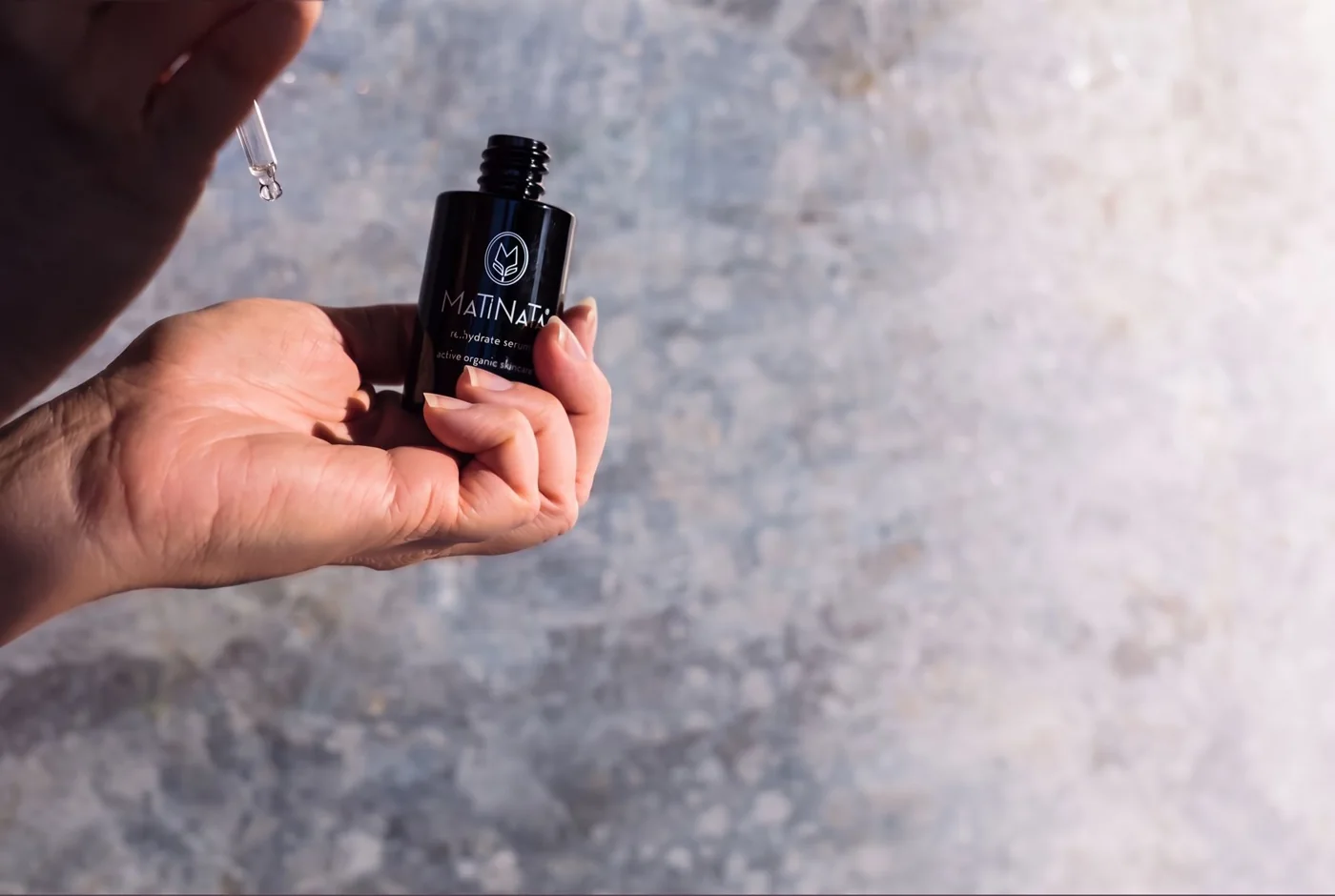
In Matinata's collection, re.hydrate is an oil-free water serum with hyaluronic acid, ectoin and glycerin. re.nourish combines humectants with shea butter and botanical oils in a moisturiser. re.glow is a botanical oil serum: an optional lipid-rich layer, not a replacement for water-based hydration or sunscreen.
A small routine, adjusted to your skin
- Cleanse gently with lukewarm water. If a product leaves persistent tightness or stinging, reconsider it rather than cleansing harder.
- Apply moisturiser while skin is still slightly damp. If you use re.hydrate, its directions are 2–3 drops on damp face and neck after cleansing and re.balance.
- For the moisturiser step, re.nourish is one option. If your skin enjoys an additional oil layer, Matinata's order is re.hydrate, then re.glow, then re.nourish. You do not need every step to start.
- In the daytime, finish skincare with a separate broad-spectrum SPF 30 or higher, used and reapplied as directed. Do not mix oil into sunscreen.
Can oily skin be dehydrated?
Yes, skin can produce oil and still feel moisture-poor. That does not mean you should force a rich oil into your routine. Start with a light moisturiser and gentle cleansing; add a water serum if you want a separate hydration step. Choose by comfort and tolerance, not by a rule that everyone needs more oil.
When to simplify—and when to ask for help
Introduce one new product at a time and try it on a small area first. Organic does not mean allergy-free: re.glow and re.nourish contain essential oils, while re.hydrate has no added essential oils but is not a guarantee against reactions. Stop using a product if it irritates you. Persistent itching, painful cracks, redness or dryness that does not improve deserve advice from a healthcare professional.
For the full sequence, read our morning and evening skincare guide. For a slower, touch-led ritual, explore facial massage and what it can realistically offer.
Explore the oil-free water serum, its complete ingredient list and how to use it. Build your routine around what your skin actually enjoys.
Discover re.hydrateSources and perspective
This guide is skincare education, not a diagnosis or treatment plan. General advice is informed by the sources below; product ingredients and application directions come from Matinata's product information. These sources do not establish clinical results for Matinata's finished formulas.
DermNet: Dry skin · DermNet: Emollients · American Academy of Dermatology: Dry-skin care
Tags: Skin care, skin longevity, organic skincare, aging skin